
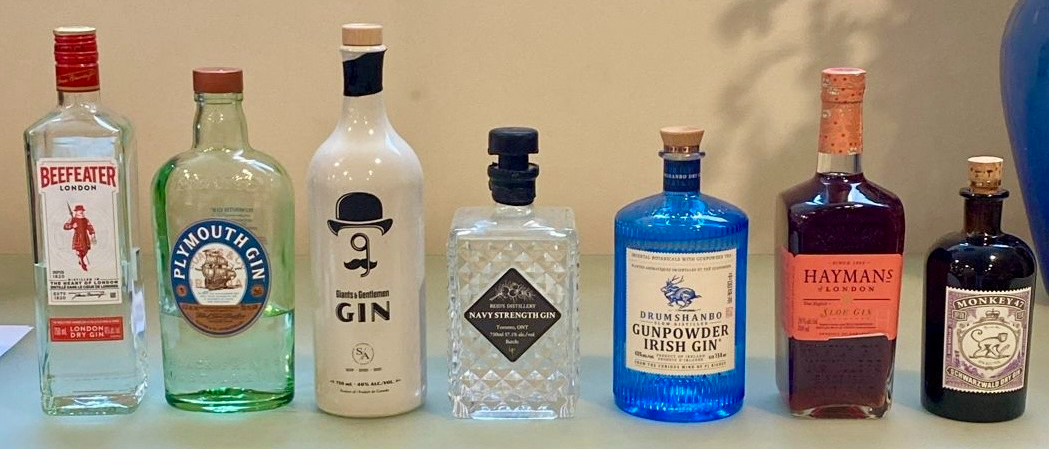
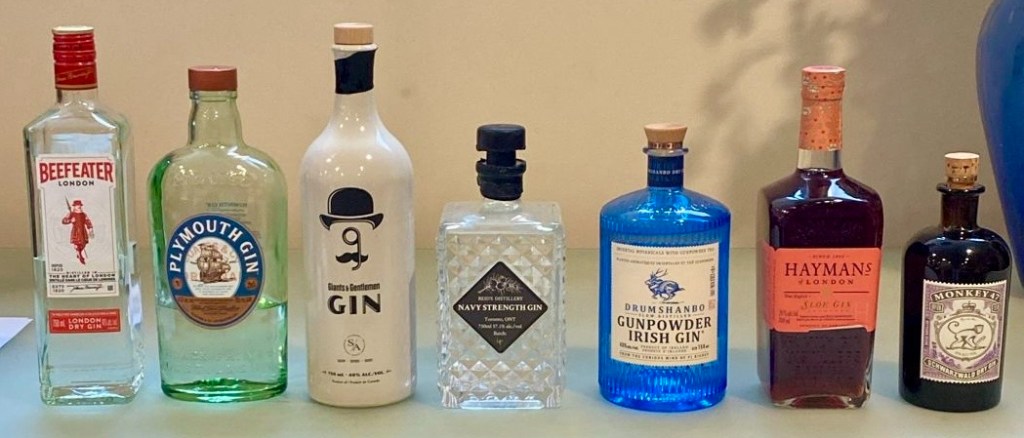
On a summer’s day in July, the Toronto Whisky Society met up for their annual “non whisky event”. If you have ever wondered about the origins of gin and the different types, the TWS had you covered!
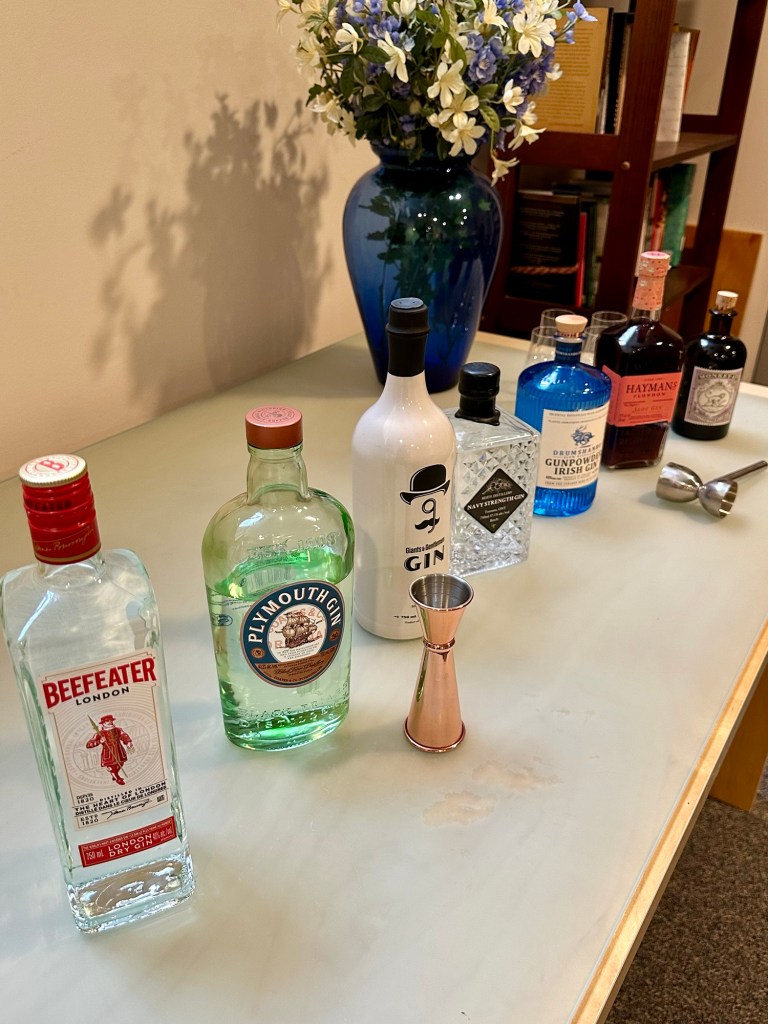
We started with of an overview on the Gin Craze which occurred in the first half of the 18th century and saw the consumption of gin increase rapidly in Great Britain but especially London. Then we proceeded to try 6 different gin expressions, before a surprise bonus gin.
London Dry Gin was first made in London, England, around the 18th century, during the Gin Craze. At this time production boomed and there were numerous distilleries in town.
(Note: this is not to be confused with bathtub gin, which was American Roaring Twenties inspired and very popular during the years of Prohibition where you could make quantities of gin in your bathtub.)
London Dry Gin is made with higher levels of alcohol and uses less water in its production. The result of this extra alcohol is a more concentrated flavor in the drink.
London Dry Gin in general doesn’t have a specific place where it was made. Instead, it’s the term that was used to describe a type of gin that was made in London, England. This gin was made from a number of botanicals, the most important being juniper berries. For the London Dry Gin we tried the classic Beefeater Gin which originated in 1863.
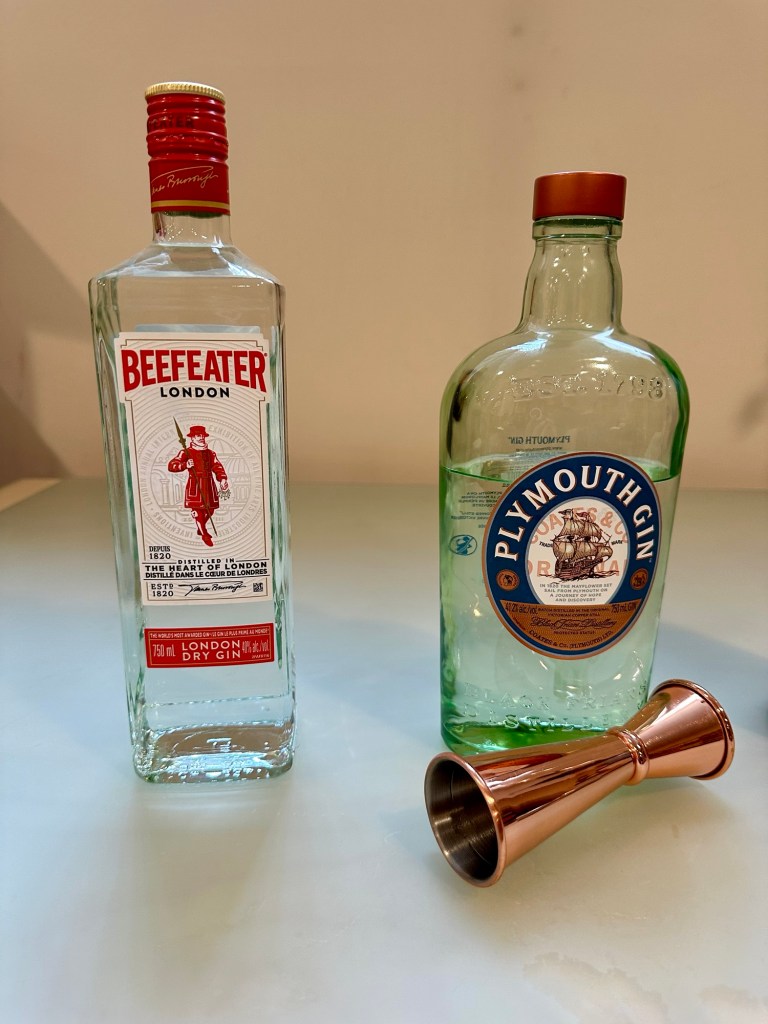
Moving on from there we then discovered a Plymouth Gin, which is a style and brand of gin that has been distilled on the same premises, the Barbican in Plymouth, Devon, since 1793. The site of the 1431 production, was reputed to have once been the Dominica Order monastery, known as the Black Friars. For this reason, it has traditionally been called the “Black Friars Distillery”, The taste profile of the style has been described as “earthy” and a little more citrus notes than a “London Dry”, which Plymouth Gin is considered an offshoot, or subtype.
Plymouth Gin was the only spirit made in England, and one of only three gins in the world, that carried a Protected Geographic Indication (PGI) designation with the European Union, certifying its traditional origin. We tried the appropriate Plymouth Gin.
Next up was Old Tom Gin represents a bridge between the earlier genever-style gins and the later London Dry Gins. This gin gets its name from the wooden plaques shaped like a black cat that were placed outside British gin houses to indicate where gin could be purchased during that era.
Owing to the Gin Craze, the British government tried to stem the flow of gin with prohibitive taxes and licensing, which drove the scene underground. Under the cat’s paw sign were a slot to put money in – and a lead tube. From the tube would come a shot of gin, poured by the bartender inside the pub.
Old Tom Gin is known for its slightly sweeter profile compared to London Dry Gin. The distillery traditionally incorporates a small number of sweeteners, like sugar, honey, or even licorice, which contribute to the gin’s distinct and rounded botanical flavor profile.
Old Tom can be aged, or not. During the 19th century, Old Tom gin was also often shipped to America and other countries using wooden barrels. “Sometimes they were very neutral barrels, other times a less neutral barrel, which often aged it,”. We went with an unaged Giants & Gentlemen Gin.
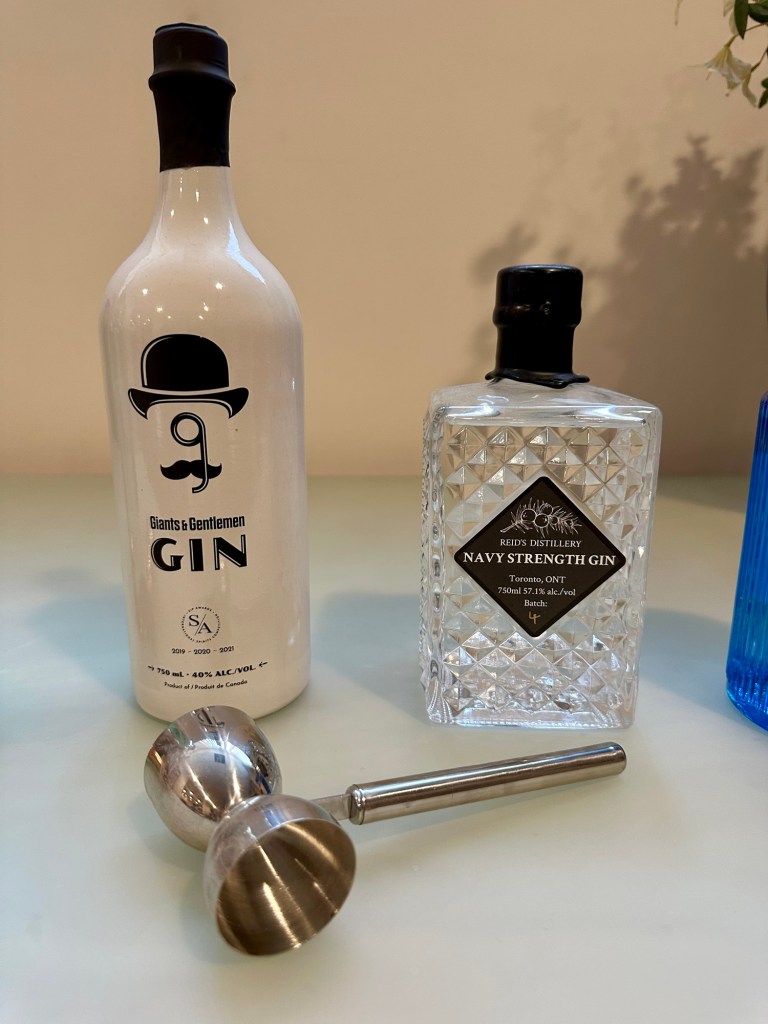
Navy Strength Gin is a type of gin that is characterized by its high alcohol content, namely an alcohol content of 57% ABV or higher. The higher alcohol content of Navy Strength Gin intensifies its flavor profile, and it is considered to put hair on your chest.
The spirit is known for its purity and with its mixture of locally sourced grains. ‘Navy Strength Gin’, invented in the 18th Century, played a significant role in Naval history. Favoured by the British Navy, it gave the crew a safe drinking option and was used to wash down the foul-tasting quinine (tonic water) that sailors had to take to prevent scurvy (along with some lime)!
Gin had to be “Navy Strength” as it was stored next to the gunpowder below deck. A lower alcohol percentage (like today’s 41.2%) would damage the gunpowder, if there was a cask leak. The Navy Strength with 57% is a flammable liquid and would therefore not damage the gunpowder unless you poured it onto the gunpowder and lit a match!
The merchants would sail into port and the Naval officers would test the strength of the Navy gin by pouring it into gunpowder and if it ignited the gunpowder, it was the correct strength and the merchants were paid. If it didn’t ignite the gunpowder the merchants were sent packing with no money.
While Navy Strength Gin has historical roots, it has also experienced a resurgence with the rise of the craft distillery movement. Many modern gin producers have created their own interpretations of Navy Strength Gin, offering a range of flavors and styles within the category. We tried a modern version, Toronto’s own Reid’s Navy Strength.
Although one would think that Irish Gunpowder Gin would be a Navy Strength (and tying in with the gun powder theme of the last gin), Drumshanbo Gunpowder Irish Gin is an oriental-inspired spirit. Taking its name from one of the signature botanicals, slowly dried Gunpowder tea, the recipe also includes lime, lemon and grapefruit. At 43% ABV the merchants probably wouldn’t be paid by the Navy, and it would damage the Gunpowder. That being said, this Gin is very sipable, on its own, on ice or with a Fever Tree Mediterranean Tonic.
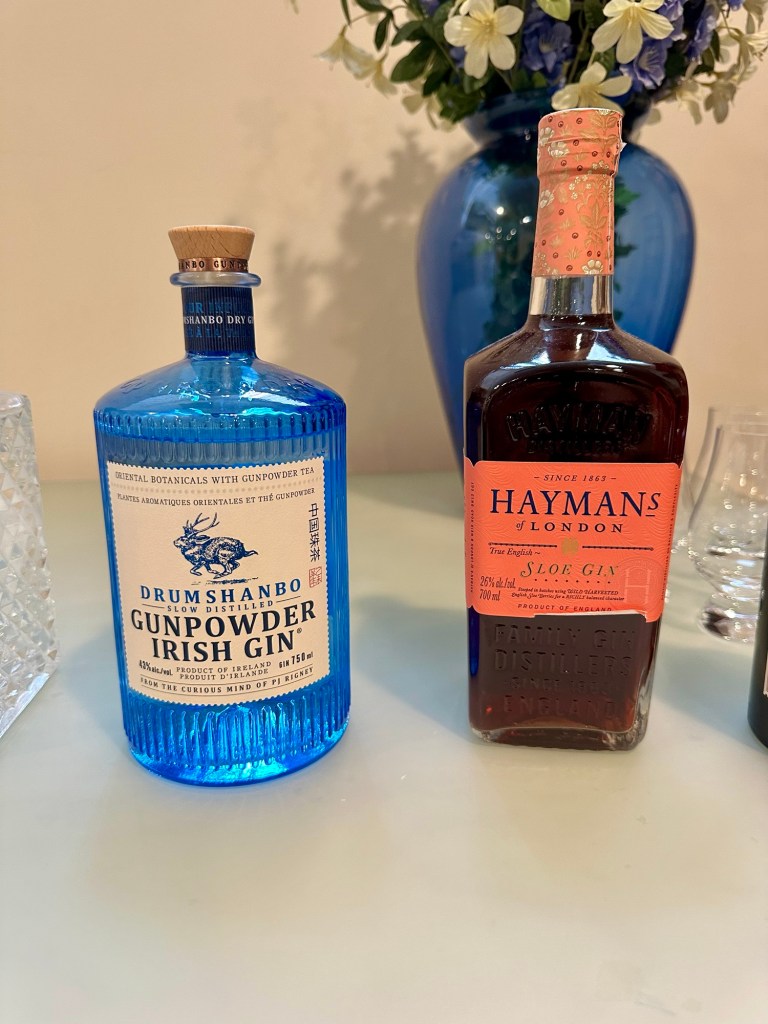
A big surprise for a lot of attendees was the Sloe Gin. One of the oldest produced gins, going back to the 1700s, this gin takes its origins from hedges that divided private lands in Britain. Since the berries are thorny, astringent and bitter (and since they seemed to be abundant) locals got creative and added them to booze. (It’s so bitter you wouldn’t eat it on its own , so it becomes booze or jam). Slow gin is a traditionally-produced gin, with juniper, coriander and citrus. The bitter and astringent sloe gin berries benefit by steeping them in gin and then slightly sweetening them. This allows for the tartness and warmth of the fruit to come through. Doing this turns the berries into a beautifully soft, slightly sweet, botanical, nutty liqueur with a little lower in alcohol content than a traditional gin.
While regular London Dry gins are 45 to 47% in alcohol, sloe gins can drop as low as 15% ABV, depending on the producer. Another dead giveaway of a sloe gin is its pink color, which can range from pale pink to rich and ruby. For our Sloe Gin pick we went with the gorgeous Hayman’s Sloe Gin.
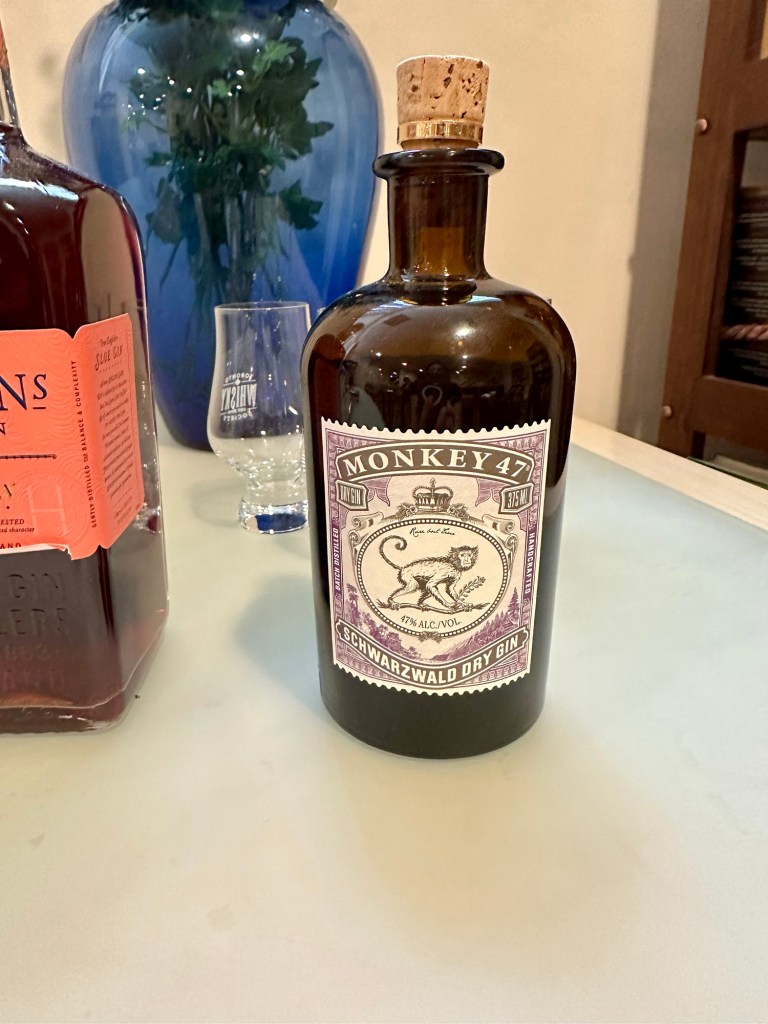
For a special bonus we managed to get a small taste of the Monkey 47 Schwarzwald Dry Gin, so named for its 47 ingredients as well as a tribute to the British Commander Montgomery who created this gin in the 1950s in the Black Forest. It was a definite fan favourite.
A big thank you to all in attendance – as well as our friends at Corby Spirit and Wine – for a fun Sunday afternoon.
 Toronto Whisky Society